GAS FITTING LICENSE ONTARIO: G3 TO G1 GUIDE FOR 2026
A straight-talk roadmap through Ontario's TSSA gas licence tiers — G3, G2, and G1. What each level lets you do, how to challenge the exam, what to study, and how to turn a certification into a working trade career.
Gas Fitting License Ontario: G3 to G1 Guide for 2026
You're probably in one of two spots right now. Either you're trying to break into the gas trade and keep hearing G3, G2, G1 without getting a straight answer, or you're already in HVAC and you're tired of guessing what the TSSA expects on the exam.
That confusion is normal. Ontario doesn't treat a gas fitting license like a single card you pick up once and forget about. It's a regulated path tied to the TSSA, the scope of work changes at each level, and the exam isn't just a memory test. If you can't move through CSA B149.1 efficiently and apply it to field situations, the exam will expose that fast.
YOUR ROADMAP TO A GAS FITTING LICENCE IN ONTARIO
In Ontario, this trade is regulated. It isn't optional, and it isn't something an employer can "work around" with in-house training. The gas fitter trade has approximately 3,700 professionals in Ontario, and the provincial Job Bank profile lists wages ranging from $26.00/hour to $62.50/hour, with a median of $36.06/hour, according to the Ontario gas fitter occupational profile and wage data.
That tells you two things right away. First, the gas fitting license is a compliance requirement. Second, it opens the door to a real trade with documented wages and a defined place in Ontario's labour market.
WHAT MATTERS MOST AT THE START
Most apprentices waste time by treating the licence like a one-step process. It isn't. In Ontario, you move through a ladder. You start where your knowledge and field exposure allow, and you progress as you gain competency and pass the next exam.
The tiers are:
- G3 — Entry-level work on residential appliances and small equipment
- G2 — Broader residential and light commercial scope
- G1 — Full commercial and industrial coverage
Each tier has its own exam, its own scope, and its own set of code requirements. The mistake most people make is assuming that passing G3 means they automatically understand G2. It doesn't. Each exam is its own threshold.
WHERE PEOPLE GET TRIPPED UP
The biggest trap is studying without understanding the scope boundary. G3 candidates who try to memorise G1-level commercial venting tables waste time. G2 candidates who ignore combustion and appliance-specific requirements fail on questions that sit squarely inside their own tier.
Study the code the way you use it in the field. Start with the scope of your current tier. Build depth there first. Then move up.
UNDERSTANDING ONTARIO'S GAS LICENCE TIERS
HOW THE LADDER ACTUALLY WORKS
Ontario's gas fitter licensing is structured as a progression. You don't skip steps unless you have specific exemptions or equivalent credentials that the TSSA accepts.
The standard path looks like this:
1. G3 certification — Allows work on residential gas-fired appliances up to 400,000 BTU/hr input
2. G2 certification — Expands scope to include additional appliance types and configurations
3. G1 certification — Covers all gas-fired equipment including commercial and industrial applications
In practice, that means a G3 can work on your home furnace, water heater, or range. A G2 can handle more complex residential and some commercial work. A G1 can work on anything, including large industrial equipment.
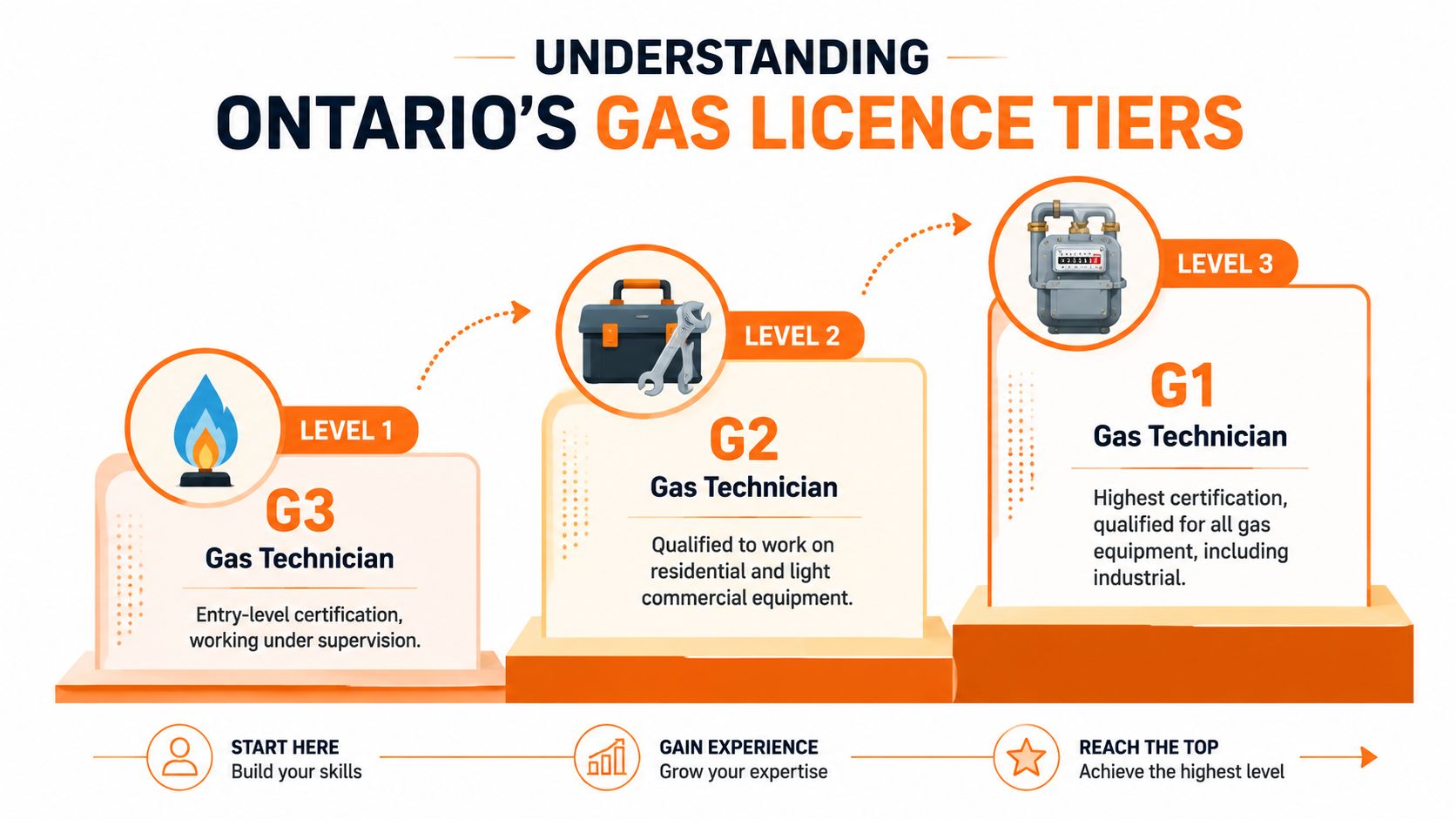
ONTARIO GAS TECHNICIAN LICENCE TIERS AT A GLANCE
| Tier | Typical Scope | Key Exam Focus |
| --- | --- | --- |
| G3 | Residential appliances ≤ 400,000 BTU/hr | Safety, basic piping, appliance installation |
| G2 | Broader residential + light commercial | Advanced venting, combustion, system design |
| G1 | Full commercial + industrial | Complex systems, industrial processes, codes |
That table is a simplification, but it's a useful mental model. The exam for each tier tests what you need to know to work safely inside that scope.
WHAT THIS MEANS IN PRACTICE
If you're starting out, target G3 first. It's the entry point. It gets you working legally, earning while you learn, and building the field knowledge that makes G2 make sense later.
If you're already in HVAC or plumbing and you're adding gas, you might be eligible to challenge a higher tier directly. But be honest about your code knowledge. Field experience without code fluency fails the exam.
CHOOSING YOUR PATH TO CERTIFICATION
COLLEGE ROUTE VERSUS EXAM CHALLENGE ROUTE
In Ontario, there are two main ways to get certified:
1. **College program** — Typically a Gas Technician program at an Ontario college. Includes in-class instruction, shop time, and preparation for the TSSA exam.
2. **Exam challenge** — For experienced tradespeople who believe they already have the knowledge. You apply directly to the TSSA, pay the exam fee, and sit the test without formal schooling.
Both paths lead to the same licence. The difference is how you prepare and what you pay.

WHO SHOULD CHALLENGE AND WHO SHOULD NOT
Challenge the exam if:
- You have significant field experience under a licensed gas fitter
- You already know CSA B149.1 well enough to reference it quickly
- You can self-study code sections systematically
- You understand the scope boundaries of your target tier
Do NOT challenge if:
- You're new to the trade
- You can't yet read code clauses and apply them
- You don't have access to proper study materials
- You're guessing at what the exam covers
A PRACTICAL WAY TO CHOOSE
Ask yourself this: Can I open CSA B149.1 right now, find a specific clause, and explain what it means for a real installation? If the answer is no, a college program or a structured study tool will serve you better than a blind challenge.
For a detailed comparison, see our breakdown of [online versus college gas fitter training in Ontario](https://flamepath.co/online-vs-college-gas-fitter).
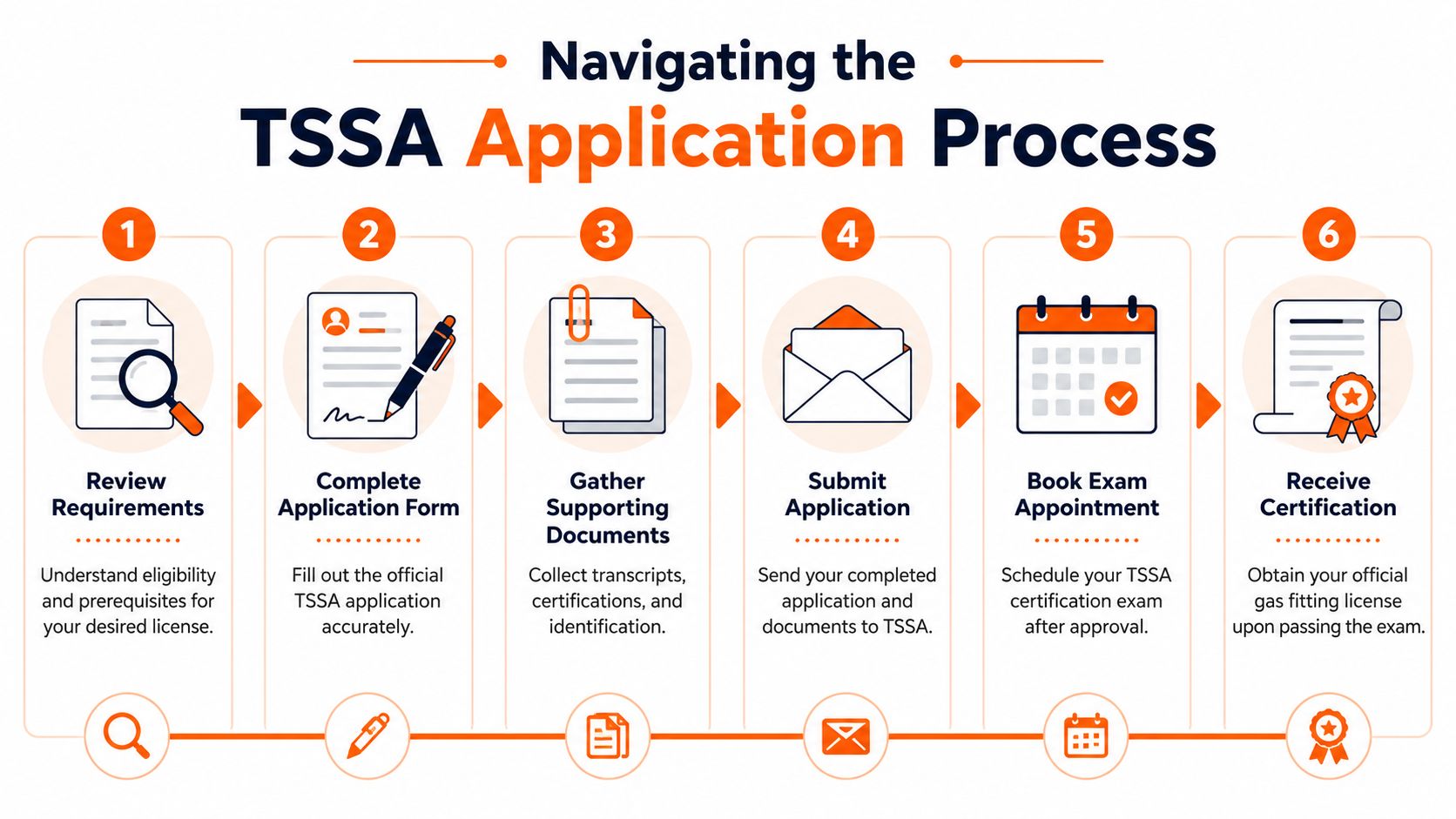
NAVIGATING THE TSSA APPLICATION PROCESS
WHAT TO GATHER BEFORE YOU APPLY
The TSSA application requires specific documentation. Get it organised before you start:
- Proof of identity and legal status to work in Canada
- Trade experience records or employer letters
- Any previous certifications or equivalent credentials
- Exam fees (check current TSSA rates)
COMMON PAPERWORK MISTAKES THAT SLOW PEOPLE DOWN
The most common delays come from:
- Incomplete experience documentation
- Missing employer signatures
- Applying for the wrong tier
- Not including equivalent credential proof
Double-check your application against the TSSA checklist before submitting. A rejected application costs time and sometimes money.
HOW TO THINK ABOUT THE PROCESS
The application isn't bureaucracy for its own sake. The TSSA is verifying that you have the background to sit the exam safely. Treat it like a pre-check on a job site. Get it right the first time.
YOUR TSSA EXAM STUDY AND PREP STRATEGY
STUDY THE CODE THE WAY YOU USE IT IN THE FIELD
The exam isn't a vocabulary test. It's a test of whether you can apply code to realistic situations. That means:
- Read code clauses in context, not in isolation
- Practice with scenario-based questions
- Learn to find answers in the code book quickly
- Understand why a clause exists, not just what it says
WHAT WORKS AND WHAT WASTES TIME
What works:
- Timed practice exams under realistic conditions
- Reviewing wrong answers until you understand the code principle
- Studying with the actual code book you'll use on exam day
- Breaking study into focused blocks (venting, combustion, piping, etc.)
What wastes time:
- Memorising without understanding
- Studying without a code book open
- Ignoring your weak areas
- Cramming the night before
THE TOPICS THAT DESERVE REPEATED REPS
Every tier has high-frequency topics. For most Ontario candidates, these include:
- Venting tables and sizing
- Combustion and air supply
- Pipe sizing and pressure drop
- Appliance installation requirements
- Leak testing and activation procedures
- Code definitions and scope boundaries
If you're self-studying or challenging the exam, FlamePath provides targeted TSSA prep tied directly to CSA B149.1 and Ontario requirements. It's built for candidates who need focused practice, mock exams, readiness checks, and AI-guided explanations without sitting through a full college program.
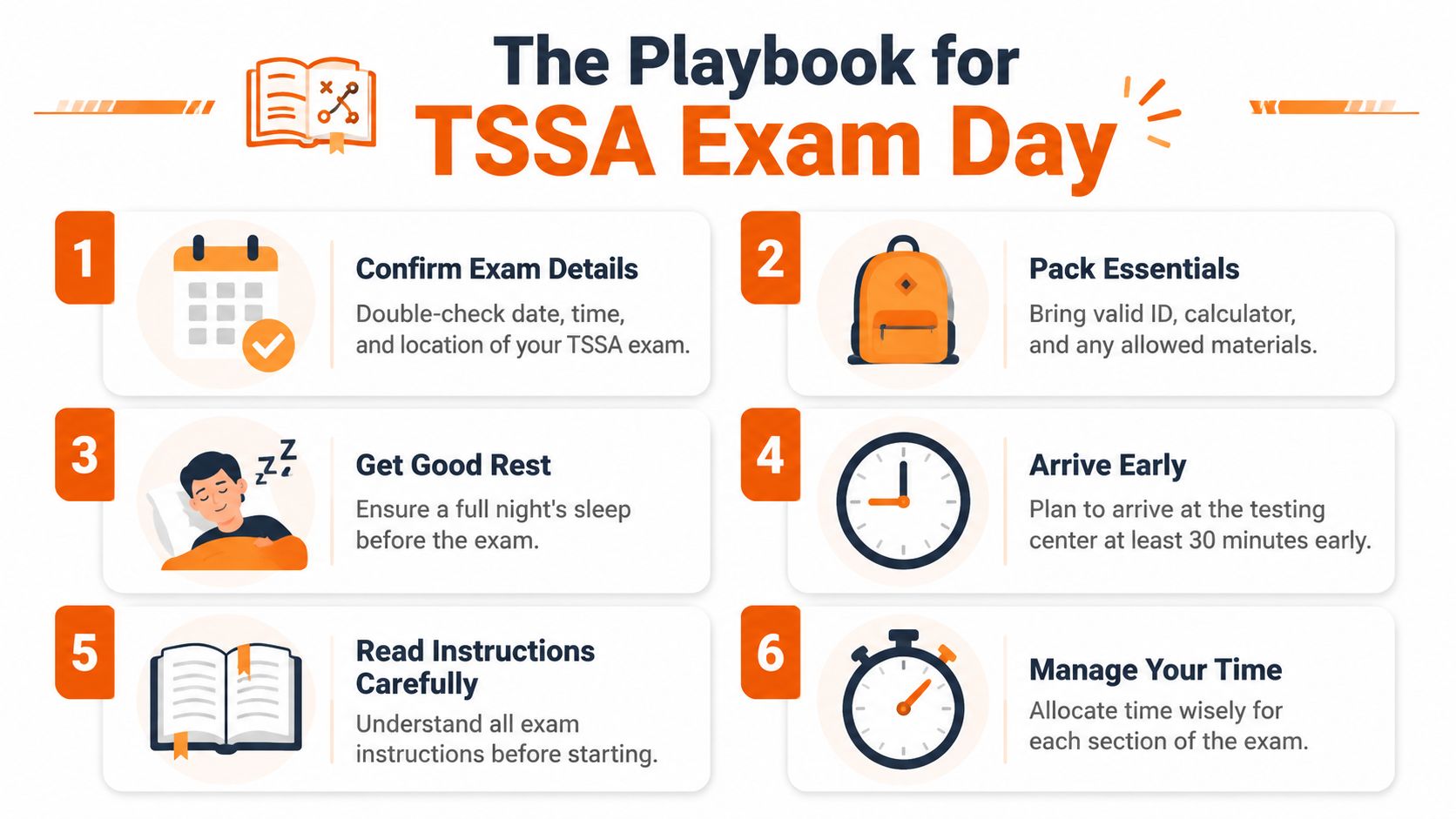
THE PLAYBOOK FOR TSSA EXAM DAY
WHAT TO DO BEFORE YOU WALK IN
- Sleep. A tired brain loses points you can't afford.
- Organise your code book with tabs for high-frequency sections.
- Know the exam format and time limit.
- Arrive early with required ID and materials.
HOW TO HANDLE THE PAPER ONCE THE CLOCK STARTS
- Read the full question before answering.
- Eliminate obviously wrong answers first.
- Use your code book. That's why you're allowed to bring it.
- Manage your time. Don't spend ten minutes on one question.
- Flag uncertain questions and return if time allows.
The exam is a performance. Prepare like one.
AFTER YOU PASS YOUR GAS FITTING EXAM
WHAT HAPPENS NEXT
Passing the exam is a threshold, not the finish line. Once your result is processed and your certification is in place, the next step is using that gas fitting license in a way that moves your career forward.
Keep your paperwork organised. Save your exam result records, certificate details, and any licence documentation where you can access them quickly. Employers, trainers, and future applications often move faster when you can produce clean proof of qualification without digging.
Then get honest about your current value in the market. A fresh G3 and an experienced G2 are not seen the same way. A new licence gets you in the door, but your practical usefulness, troubleshooting ability, and code accuracy are what keep that door open.
HOW TO TURN A LICENCE INTO A JOB
Ontario job postings show a clear pattern. Employers often want certification plus experience. Indeed listings for gas fitter roles in Ontario showed 63 jobs with a pay band of roughly C$44K to C$101K, and related postings commonly mention rates around C$37/hour for Gas Fitter 2 Technician roles while asking for field experience, according to Ontario gas fitter job listings on Indeed.
That means your licence is the key, but it's not the whole lock. Here's what employers usually care about once you're certified:
- Can you work within your scope without guessing
- Can you read the code and apply it on real equipment
- Can you troubleshoot instead of just swapping parts
- Can you show up as someone who's safe, teachable, and accurate
If you've just passed, target roles that let you build the next layer of judgement. Don't chase title alone. Chase reps on equipment, clean installs, proper commissioning habits, and service calls that force you to think.
The apprentices who grow fastest are usually the ones who keep studying after the exam, ask better questions on site, and treat every call as code practice with consequences.
If you're preparing for G3, G2, or G1 through self-study or the exam-challenge route, FlamePath is built for Ontario candidates who need focused TSSA prep tied to CSA B149.1 and Ontario requirements. It's not a college program. It's targeted exam practice with mock exams, readiness checks, AI-guided explanations, and a path for candidates who want to challenge the TSSA exams directly. FlamePath also includes an apprenticeship marketplace for Ontario shops looking to connect with candidates who are already serious about getting licensed.